Archive for November, 2009|Monthly archive page
The killing of Neda
Filed under: media, politics | Tags: CIA, film, foreign affairs, Iran, media, national security, politics, technology, Twitter
 Comments (2)
 The new documentary “A Death in Tehran” continues the stellar investigative work of Frontline, casting light on the fate of Neda Agha-Soltan, the young woman whose murder during Iran’s election chaos last summer commanded historic attention. On the PBS/Frontline web site you can watch the documentary in its entirety. It’s well worth the time. The film illuminates the circumstances of the shooting and its aftermath through extensive use of amateur video from the street protests and interviews with people close to Neda — including the doctor who tried to save her as she quickly bled to death on the street.

The chilling footage of Neda’s death in late June zipped around the globe on an unprecedented digital wave, instantly making hers the face of the rising reformist movement in Iran. One compelling segment of the documentary details how the Iranian hardliners reacted to this threat against their grip on power.
In response to the international outcry over Neda’s death — including President Obama’s confirmation that he’d seen the “heartbreaking” video on YouTube — the regime set about attempting to rewrite the story, pointing a finger at the CIA and outside agitators, the same forces they blamed for the mass street protests and allegations of vote rigging that led to the greatest upheaval in Iran since the revolution of 1979.
The film also uncovers some remarkable footage of Neda’s killer, “a member of the Basij militia who’d been brought into Tehran by the regime’s Revolutionary Guards to stamp out the ‘Green Revolution.'” In an interview with Frontline, Arash Hejazi, the doctor who tried to save Neda as she lay dying in the street, describes watching the crowd’s reaction to the man who had fatally shot her. “They started to discuss what to do with him,” Hejazi recalls. “They grabbed his wallet, took out his ID card and started shouting, ‘He is a Basiji member; he is one of them,’ and started swearing and cursing him, and he was begging for people not to harm him or kill him.”
Incredibly, the killer walked. “They believed the police wouldn’t do anything to him as the Basiji are really powerful and he would have easily have got away,” Hejazi says, “so in all of the chaos they decided to release him.”
The documentary describes how the regime sought further to cover up a brutal crackdown: “The Iranian government admits 11 protesters were killed on June 20, but doctors from three Tehran hospitals confirmed at least 34 deaths. Other bodies were buried by security forces without first being identified.”
New York Times blogger Robert Mackey, who has cranked out much excellent coverage of the fallout from the Iranian election, has more here. In late June, I wrote extensively about the unprecedented role digital media played during the upheaval on the streets of Tehran; that’s available here.
Helping fix the error-filled news
Filed under: California, media | Tags: California, future-of-journalism, language, media, San Francisco, technology
Comments (1) I’m very happy to announce my involvement in a new startup called MediaBugs, where I’ll be serving as associate director and community manager. I’m joining with project founder and director Scott Rosenberg (with whom I had the great pleasure of working during my years at Salon) for what we anticipate will be an exciting and, hopefully, groundbreaking effort. We are now in the process of building out our Web site, with plans to start rolling out the service in early 2010. The two-year project is funded by the Knight Foundation, and will focus on all manner of media in the San Francisco Bay Area.
In a nutshell, MediaBugs will provide a neutral, civil forum where the public can report errors they encounter in the news and try to get them fixed. The idea is to leverage the open-source power of the Web to achieve greater transparency and dialogue among media institutions and the public, and thereby improve the quality of the news.
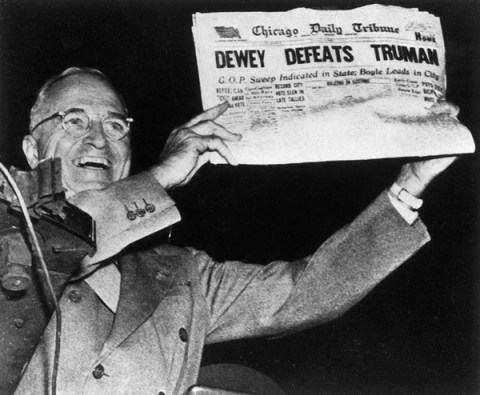
We see it as a winning proposition for everyone involved — a way to begin rebuilding public confidence in the media, while offering our fellow journalists a compelling tool they can use to enhance their work in this ever-dynamic digital age.
Why focus on fixing errors in the news? For one, public trust in the media wallows at a historic low. As Scott explained in a recent blog post, there are several reasons for this — perhaps chief among them that the news is riddled with mistakes, and an extraordinary percentage of them go uncorrected.
There are different kinds of errors, but even the seemingly trivial ones matter. (And there are a great many of them, as detailed at the above links, a status quo surely not helped by today’s painful editorial cutbacks.) If the local paper or news site regularly publishes misspelled names or inaccurate dates, how can its readers trust that it got the really important stuff right?
The problem afflicts small and big players alike. This week, the Washington Post’s public editor Andrew Alexander was compelled to explain why a respected sports columnist at the paper whiffed big time with some of his World Series coverage.
“By my count,” Alexander wrote, “the column contained at least 20 typos, grammatical errors or misspellings.”
Curiously, the Post treated a cleaned-up version of the piece, posted online after the shoddy print version went out, as separate. That’s a questionable distinction, with the lines between blog posts, columns and articles rapidly blurring these days, and with digital and print newsroom operations fast merging. There is still no correction appended to the online version of the World Series column, so unless you’d already caught wind of Alexander’s write-up you wouldn’t even know about the flurry of mistakes that appeared in print. Doesn’t seem like the best way to win over skeptical readers.
For more details on how MediaBugs will work, visit our site here, and stay tuned for more soon.
 Mark Follman
You must be logged in to post a comment.