Archive for the ‘politics’ Category
Is AIG evil? Let’s hear from the people!
Filed under: media, politics | Tags: economy, future-of-journalism, media, NYT, politics, recession, technology, Wall Street
 Leave a comment
 At hearings Wednesday on Capitol Hill lawmakers excelled at one of the things they do best: political theater. The outrage flowed, as Edward Liddy, the current CEO of American International Group, got grilled about the $165 million in bonuses going to a bunch of guys who helped bring the U.S. banking sector to the brink of collapse with immense and immensely reckless insurance bets. (A complicated scheme, but credit to President Obama, who did a decent job Wednesday morning of explaining in basic terms how they did it.)

To what degree Americans should be angry at taxpayer-backed AIG or our government leaders (past and present) is a murky discussion, but it’s clear that the level of outrage across the country is plenty high right now. (High enough not only to juice a show on Capitol Hill, but also some widely celebrated media blood sport.) What’s interesting to me at the moment is how a number of major news outlets have seen the popular discontent as an opportunity to highlight reader interactivity on the Web.
At the top of its home page Tuesday night the New York Times featured reader diatribes — treating them as news itself. “Some people are vengeful, calling for jail, public humiliation or even revolution,” reported A.G. Sulzberger. Over the last few days, “the most passionate voices, not surprisingly, could be found on the Internet — on blogs and discussion threads — in unusually bountiful numbers.”
On Wednesday afternoon, the Washington Post featured a round-up of its own reader comments, if not especially articulate or enlightening. (“Corporate and political self-seeking are devastating our families, our country, and out [sic] world.” Etc.) The Wall Street Journal’s home page gave top real estate to voices from the “Journal Community,” which tended, naturally, to reflect a constituency of a somewhat different kind. “The Obama administration is spending too much time and resources to go after this money,” scolded reader Craig Cohen. “The fact is, it will probably cost the US more money in legislative time, attorney fees, opportunity cost, etc to get these bonuses back than they are worth. But that doesn’t matter to the President. This is not about bonuses. It’s about class warfare. These bonuses went to the elite…. They must be punished!”
A key question on my mind is, how can media companies unlock greater potential with reader engagement and participation? It’s stating the obvious to say that there’s nothing cutting-edge at this point about letting readers loose with their opinions. (Put nicely, it tends to have limited value in unfiltered form.) Are there new ways to generate useful insight and information from the many smart readers out there, rather than just a lot of noise? This is an issue we grappled with regularly over the years when I was at Salon, and I have a hunch it could figure prominently in ways forward with news reporting in the rising digital realm. What if, for example, readers with experience in the culture of Wall Street could begin to add to the picture of how the AIG problem metastasized? Or shed light on how thoroughly it has been reported on?
Smart people have been working on ideas in this area for some time. Mother Jones has an interesting activist-style approach that it’s experimenting with. Between the ongoing destruction in the newspaper industry and what some major companies are attempting now online in terms of reader interactivity (the two hardly unrelated), I have the sense that whoever begins to unlock the challenge in a more creative, substantive way could make a big splash.
About that big Jim Cramer beatdown
Filed under: culture, media, politics | Tags: economy, recession, television, Wall Street
Comments (7) Jon Stewart is getting showered with praise for his showdown with CNBC’s Jim Cramer Thursday night on “The Daily Show.” The culmination of a week-long “feud” (egged on by the salivating media at large) was riveting to watch. (The video is here.) Stewart, long a savvy media critic, brutalized Cramer both for his own and the financial news network’s direct role in the economic meltdown that has vaporized untold wealth and hobbled the United States of America.
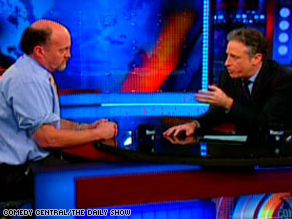
If that sounds a tad overdone, well, indeed. There is plenty of truthiness in Stewart’s point. It’s easy to sift through footage from various CNBC shows and find no shortage of their hosts making wrong calls about the financial markets, cheering on suspect CEOs and exuding what in hindsight was obviously misguided optimism about the economy and the stock market. Not to mention analyst Rick Santelli’s puerile, faux-populist tirade last month about the mortgage crisis.
But there is also some intellectual dishonesty suffusing the big CNBC takedown so in vogue right now. It’s easy to level simplistic snark at the network per above. But few seem willing, Stewart included, to acknowledge what the popular financial news network is mostly about, as I wrote about here recently: daily infotainment, emphasis on tainment.
Let’s be honest, we’re all plenty hungry at present for the villains of Wall Street to be strung up in the town square. But blame-the-media is the easy way out. It’s a bit silly to assign the degree of culpability that Stewart just did to a guy who, on his daily stock picking show, bounces around detonating obnoxious sound effects and exclaiming “Booyah!” like a frat guy on meth.
Stewart has other smart thinkers in the media following right along. David Brancaccio, host and senior editor of “Now on PBS,” told CNN that Thursday night’s show marked an important moment in journalism, especially for financial reporting, and that it may serve as a cautionary tale for those in the media who would fail on due diligence. “I don’t think any financial journalist wants to be in Cramer’s position,” Brancaccio said. “I think [journalists] may redouble their efforts to be dispassionate reporters asking the tough questions.”
That’s just goofy. Jim Cramer is not a financial journalist. He’s a self-cultivated nut-job host of a popular sideshow for Wall Street wonks. His script brims with speculative investment ideas, clumsy jokes and useless if marginally entertaining financial prattle.
The truth of the matter is that while CNBC certainly is ripe to take some lumps in this new era of Great Recession, the network is the easiest of targets. It’s also worth noting that there is substantive reporting in its mix. Last month, in fact, I spent some time interviewing CNBC anchor Maria Bartiromo and correspondent Bob Pisani at the New York Stock Exchange for a forthcoming magazine article about the financial media. Mostly I found them to be informed, thoughtful and dedicated to their work as reporters. For one example, see the high marks Bartiromo got for grilling ex-Merrill Lynch CEO John Thain on her show back in January. For another, watch this recent Frontline documentary, which recounts how in spring 2008 CNBC reporter David Faber helped pull the curtain back on Bear Stearns and impacted the timing of the investment bank’s collapse.
No doubt they and others on the network also had craven moments of their own during the boom times. As did so many in American government, business and, yes, out there in TV-viewing land. A dramatic and bloody round of the blame game is quite satisfying to watch right now, especially in the able hands of Mr. Stewart, but the culpability for our economic predicament extends far, far beyond the spectacle of one television channel.
Mexico’s chilling drug war, at the door
Filed under: politics | Tags: economy, foreign affairs, globalization, guns, maps, Mexico, national security, war
Comments (2) In yesterday’s post about the chronically failing war on drugs, I didn’t mention Mexico — drug war-related problems just across the southern U.S. border have gotten big enough and scary enough to command their own focus. Mexico’s growing instability draws from a complex and long-running set of government and societal issues. But U.S. policy is a large and indisputable factor, and not just anti-drug policy. Indeed, our vast market for marijuana, cocaine and other illicit substances provides the criminal gangs with an endless river of cash. But even more troubling, our lax gun laws and prolific gun dealers supply them with stockpiles of nasty, sophisticated weaponry.
The contents of a new travel warning from the U.S. State Department posted in late February are nothing short of astonishing. The greatest increase in violence has occurred near the U.S. border. And it literally is a war:
Some recent Mexican army and police confrontations with drug cartels have resembled small-unit combat, with cartels employing automatic weapons and grenades. Large firefights have taken place in many towns and cities across Mexico but most recently in northern Mexico, including Tijuana, Chihuahua City and Ciudad Juarez.
The carnage, according to the State Department, has included “public shootouts during daylight hours in shopping centers and other public venues.” In Ciudad Juarez alone, just across the border from El Paso, Texas, Mexican authorities report that more than 1,800 people have been killed since January 2008.

Hot zones in Mexico's drug war. (Source: Wikimedia commons.)
According to a report in early March from “60 Minutes,” nearly 6,300 people were killed across Mexico last year in drug-related violence, double the amount of the prior year. There have been mass executions of policemen, kidnappings and beheadings. Mexico’s attorney general Eduardo Medina-Mora tells of weapons seizures including thousands of grenades, assault rifles and 50-caliber sniper rifles. The vast majority of them, he says, were acquired inside the United States.
Breaking the addiction to the drug war
Filed under: culture, politics | Tags: Canada, economy, foreign affairs, globalization, law, Mexico, national security, Vancouver
Comments (2) In Vienna this Wednesday policy makers will convene once again to consider the United Nations strategy for battling illegal narcotics worldwide. It’s a war that is statistically impossible to win. A report today from the Guardian points to the massive cocaine trade out of Latin America to exemplify how the supply-side war on drugs is equivalent to shoveling water on an international scale:
The crucible is Colombia, the world’s main cocaine exporter. Since 2000 it has received $6 billion in mostly military aid from the US for the drug war. But despite the fumigation of 1.15m hectares of coca, the plant from which the drug is derived, production has not fallen. Across the whole of South America it has spiked 16%, thanks to increases in supply from Bolivia and Peru.
Says César Gaviria, Colombia’s former president and co-chair of the Latin American Commission on Drugs and Democracy: “Prohibitionist policies based on eradication, interdiction and criminalisation have not yielded the expected results. We are today farther than ever from the goal of eradicating drugs.”
Says Colonel René Sanabria, head of Bolivia’s anti-narcotic police force: “The strategy of the US here, in Colombia and Peru was to attack the raw material and it has not worked.”
 Halfway around the world it’s the same story with the heroin trade out of Afghanistan.
Respected U.S. economists and judges agree: Our long-running drug policy with ideological roots tracing to Reagan and Nixon has gotten us nowhere.
If, as Tom Friedman argued yesterday, we have crossed a historic inflection point for fundamentally recasting our global economic paradigm, then it seems the costly war on drugs should be of a piece. There are no easy solutions, but there are promising alternatives to the status quo. A few years ago I reported an in-depth series for Salon examining “harm reduction” policy implemented in Vancouver, whose emphasis at a local level was on curbing drug demand and its attendant social problems. It appeared to work remarkably well.
There are signs the Obama administration might take things in a different direction. For his new director of the Office of National Drug Control Policy, President Obama reportedly has nominated Seattle police chief Gil Kerlikowske, whose views on drug policy seem decidedly more moderate than those of Bush-appointed hardliner John P. Walters. As the Guardian also notes today, a report last fall by the Government Accountability Office concluded the war on drugs had failed in Colombia — a report that was commissioned by then Senator Joe Biden.
Hard truths about the Iraq war
Filed under: California, politics | Tags: books, California, foreign affairs, national security, politics, war
Leave a comment 1. With such enormous problems at home, it is hard to focus on enormous problems beyond U.S. borders, even when we perceive the dangers of turning too inward.
2. It is hard not to be exhausted of and desensitized to the whole awful mess. A week from this Thursday, it will have been six years since George W. Bush launched “shock and awe.” For the vast majority of Americans who have no direct connection to the war, if we are brutally honest with ourselves, it is hard in some respects to care at this point. (More on this below.)
3. It is but one of two daunting wars we are fighting. (And the new president is poised to make the other one larger.)
4. It is far, far from over.
 Despite items one and two above, distinguished military reporter Thomas Ricks had some tranfixing things to say about the war on Wednesday, during an interview on NPR about his new book. Ricks’ comments are likely to prove distinct from the White House talking points and news coverage that will mark the six-year anniversary of the conflict in the coming days. His reporting in Iraq, including interviews in 2008 with Ambassador Ryan Crocker, the top U.S. diplomat there, left Ricks to conclude, “The events for which this war will be remembered have not yet happened.” Here’s a bit more of what was most striking among his comments, from the forbidding magnitude of the problem to some startling attitudes about the war that Ricks encountered while promoting his book recently in the liberal-by-reputation Bay Area:
On the time frame we face:
“I think we may just be halfway through this war. I know President Obama thinks he’s going to get all troops out by the end of 2011. I don’t know anyone in Baghdad who thinks that’s going to happen. I think Iraq is going to change Obama more than Obama changes Iraq.”
On the scope of the disaster:
“The original U.S. war plan was to be down to 30,000 troops by September 2003…. I do think this war was the biggest mistake in the history of American foreign policy. I think it’s a tragedy. I think George Bush’s mistakes are something we’re going to be paying for for decades. We don’t yet understand how big a mistake this is.”
On the destructive prospects of the U.S. military pulling out:
“I think Americans are really sick of the Iraq war…. I was speaking in California last week, near liberal Mill Valley, and I said, Look, if you leave right now this could lead to genocide. And somebody in the audience said, ‘So what.’ And somebody else said, ‘Genocide happens all the time.’ And I thought, my god, Americans are willing to take genocide in Iraq, and just leave.”
A reality check for the recovery plan haters
Filed under: media, politics | Tags: economy, media, original reporting, politics, recession, television, Wall Street
Comments (1) It doesn’t seem particularly out of the ordinary when Rush Limbaugh looks at Obama’s economic recovery plan and reiterates his desire to see the president fail. Or when Gov. Bobby Jindal, purportedly the rising star of the Republican Party, argues that federal spending is a bad way to pull the nation back from the brink. But these are no ordinary times — faced with the greatest domestic crisis in modern memory, at what point does hard-line politics make for sheer lunacy?
While reporting for a forthcoming magazine piece, I spoke recently with economist Dean Baker about some of the political right’s machinations regarding the economic meltdown.
“One thing that was amazing to me was people blaming the housing crisis on the Community Reinvestment Act. It makes no sense whatsoever,” said Baker, who is co-director of the Center for Economic and Policy Research in Washington. “The idea was widely circulated, so there are a lot of people out there who believe that what lies at the center of the crisis is that the government forced banks to make loans to poor people and minorities. That’s absurd, and the media should’ve been doing more to point that out.”
A few did, at least: Businessweek’s Aaron Pressman explained last fall why the 1977 federal law, requiring banks to lend in low-income neighborhoods where they take deposits, had little to do with the insidious subprime mortgages that inflated the housing bubble. (Pressman further pointed out that the Bush government in fact weakened the CRA, while enabling Wall Street to gorge on dubious derivatives and absurd leverage.) But the blame game holds powerful emotional appeal in dark days, and the warriors of the right soldier on in earnest. 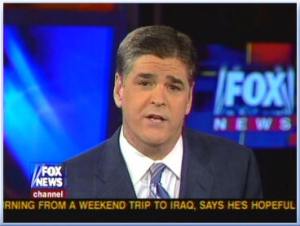 Fox News’ Sean Hannity keeps repeating a debunked GOP talking point that the freshly signed $787 billion recovery package contains a $30 million provision to save a salt marsh mouse in San Francisco. Simply erroneous, as Congressman Joe Sestak pointed out this week on Hannity’s own show. (Here’s the video.)
Baker worries that partisan warfare will squelch political appetite for additional stimulus — which he believes will be necessary going forward. Obama had to fight hard just to get the first big spending plan through Congress. “Nobody wants to waste money,” Baker said, pointing out that job creation and a particular project’s usefulness are different issues. “But if the alternative is that people think we’re somehow going to benefit by not spending money, then they’re just on another planet.” Without more government spending to come, he said, “we could see this downward spiral continue for some time.”
California notebook: New highs, new lows
Filed under: California, media, politics | Tags: California, economy, environment, food, politics
Leave a comment  San Francisco’s Tom Ammiano, a former city supervisor turned state assemblyman, wants to go green to help bail out the state from fiscal crisis. His plan would boost weed farms not wind farms. He introduced a bill Monday to legalize recreational marijuana and regulate it in a manner similar to alcohol, with a potential tax windfall of more than $1 billion. (The fragrant green stuff is thought to be a $14 billion cash crop in the state. Then there’s the potential savings in law enforcement costs in the hundreds of millions.) Not likely to fly, despite California’s reputation for cutting-edge policy and a devastating $42 billion deficit. But credit the San Francisco maverick for thinking creatively in a time of crisis. And credit the political opposition with the Most Mangled Cliché Award — said Calvina Fay, executive director of Save Our Society From Drugs, in the LA Times: “This would open another door in Pandora’s box.” (What’s she been smokin’?)
•
It’s been raining in the Bay Area for almost a week straight, happy news after a bone-dry January. But 2009 is on track for a third straight year of drought in California, with reservoirs still sitting at alarmingly low levels. It’s not just the prospect of shorter showers and less lush front lawns. As Jesse McKinley reported on the front page of Sunday’s New York Times, the twin calamity of recession and drought is hitting the Central Valley, the nation’s biggest agricultural engine, hard. Even as your income may be headed south, you’ll soon be paying more if you want almonds and avocados.
•
The once venerable San Francisco Chronicle may be the next casualty of the besieged newpaper industry. The paper lost more than $50 million in 2008 and is on pace to fare worse this year. Its owner, the Hearst Corporation, is demanding deeper cuts among an already downsized staff. If that doesn’t stem the tide of red ink, Hearst execs say, “we will have no choice but to quickly seek a buyer for The Chronicle, and, should a buyer not be found, to shut down the newspaper.” As with many others the publication’s reporting capacity has been shriveling as it struggles to survive the industry’s upheaval. But San Francisco without its oldest and largest newspaper? At the very least, another clarion call for digital journalism 3.0 to really get cranking.
Update: David Cay Johnston explains how the Chronicle, tellingly, failed to report adequately on its own serious situation.
Nothing to fear but everything itself?
Filed under: media, politics | Tags: economy, language, media, poetry, politics, recession
Comments (2) With the stock market sitting at half the level it did a decade ago, and with new surveys showing carnage in consumer confidence and housing, I’m struck by the saturated language of the national nightmare. (It’s not just the apocalyptic headlines driving us to despair.) This story from the Associated Press today gathers the poetry of the pain — after its lead sentence announcing that American confidence went into “free fall” in February, the relatively short dispatch uses each of the following terms at least twice:
fear (2)
decline (2)
plummet (2)
plunge (2)
collapse (2)
severe (2)
slash (2)
shrinking (2)
battered (2)
suffer (3)
drop (4)
sink/sank (4)
worried (4)
low (6)
Superlative phrases in the story include “massive job cuts,” “driven to their lowest level ever” (consumer expectations) and “the largest drop in its 21-year history” (a national home price index).
Recently a friend sent me an email wondering why President Obama hasn’t done more to talk up confidence as he’s traveled around promoting his economic recovery plan. The answer probably lies most in the calculus of Capitol Hill, and the political pressure apparently needed to pass his legislative agenda. There’s also Obama’s admirable position that he won’t sugarcoat the truth about our troubles the way the administration before him did to such disastrous effect.
But it’s a daunting balancing act with perception at this point. You don’t have to be an economist to sense how the downward spiral of fear could itself become deeply damaging. (If it hasn’t already — as Robert Shiller warned in a recent column, a Great Depression narrative “could easily end up as a self-fulfilling prophecy.”) And Obama’s political opponents increasingly are able to agitate using raw emotional appeal: Last night CNN’s in-house ideologue Lou Dobbs hammered at Obama’s “fear mongering” and accused him of repeatedly talking down the markets and economy. In the New York Times today David Brooks feigns sympathy for the president while suggesting that Team Obama is in way over its head. (“I hope the president succeeds even though he probably won’t!” is the message.)
Many will be watching intently tonight when Obama addresses a joint session of Congress for the first time. The only positive polling in sight shows that he’s still got the thumbs-up on job approval from a decisive majority of the public. It’s a remarkable measure of confidence floating on a tide of ugly numbers — Americans believe Obama will sail us in the right direction, even with no horizon in view.
Obama’s next epic crisis on the horizon
Filed under: politics | Tags: foreign affairs, intelligence, Iran, Israel, national security, politics
Comments (1) Sure, the Dow is hitting new lows and the economic meltdown is looking pretty damn frightening. (If the recent flood of headlines hasn’t made you want to hide in a hole, just read Paul Krugman’s mostly despairing analysis today.) But for the new president the trouble is only just beginning, as dark clouds gather to the east. Iran, it seems, is accelerating down a path toward nuclear weapons. That’s troubling in its own right — but far more so when adding to the mix a new right-wing government in Israel, the possibility of which looks imminent as hardliner Benjamin Netanyahu gains an edge in the country’s close election.
In late 2007, my friend and fellow journalist Gregory Levey took an in-depth look at Netanyahu’s political resurgence and the regional conflict that potentially could be unleashed if he returned to power. (This would be his second time as prime minister, having served from 1996-1999.) For anyone in the Israel peace camp, it would be an understatement to say that the prospect did not bode well. And now Iran may be even closer to being perceived truly as an immediate and existential threat. So while President Obama, admirably, has been signaling interest in a new era of diplomacy with the Iranians, he soon may be facing a much more dangerous brew in the Middle East.
Toxic banks one-up bin Laden
Filed under: media, politics | Tags: economy, foreign affairs, globalization, intelligence, national security, osama bin laden, politics, terrorism, Wall Street
Leave a comment I’ve been thinking about the economic crisis as a rising national security danger since sometime back in December, and I’m sure I haven’t been alone, even though scant attention has been paid in the mainstream media — until now. It’s only an odd coincidence that the same day earlier this week that I was suggesting we’d soon be hearing more from President Obama’s intelligence chief on the matter, Dennis C. Blair was in fact on Capitol Hill sounding the alarm. The global economic crisis now represents the top security threat to the United States, he told the Senate Intelligence Committee on Thursday.
“Roughly a quarter of the countries in the world have already experienced low-level instability such as government changes because of the current slowdown,” Blair said. (That would be nearly 50 countries. Including Iceland, whose government collapsed three weeks ago.) Blair further warned of the kind of “high levels of violent extremism” seen in the 1920s and 1930s if the economic crisis persists beyond 2009.
The fears have now reached the front page of Sunday’s New York Times: “Unemployment Surges Around the World, Threatening Stability.” The trio of images above the fold are a quick world tour of worker displacement and unrest, from Bejing to Reykjavik to Santiago, where street graffiti declares “unemployment is humiliation.”

Ivan Alvarado/Reuters
Just one glaring manifestation of a troubling global trend.
From decadent to ominous in Dubai
Filed under: culture, politics | Tags: economy, environment, globalization, national security
Leave a comment Laid-off foreigners are fleeing Dubai as the emirate’s economy collapses, according to Thursday’s New York Times. Thousands of their abandoned cars reportedly now sit at the Dubai airport, while dark rumors spread about luxury developments sinking (literally) and lavish hotels turning decrepit.

Long ago I was astonished by the development-cum-decadence of Dubai — the excess seemed nuts even in unprecedented oil-boom times. (The desert as home to the world’s largest indoor snow park? A 154-story skyscraper sired by a “cybersheik”? A giant artificial island whose palm-tree-shaped land cost north of $12 billion in reclamation alone?) It couldn’t end well.
Now it may well be ending. What’s most haunting about the Times report isn’t the opening tale of a young French expat who leveraged herself with a $300,000 apartment and may have to flee the country or face debtors’ prison. It’s the circumstances of Hamza Thiab, a 27-year-old Iraqi who relocated from Baghdad to Dubai in 2005, and who lost his job with an engineering firm six weeks ago:
Mr. Thiab was sitting in a Costa Coffee Shop in the Ibn Battuta mall, where most of the customers seemed to be single men sitting alone, dolefully drinking coffee at midday. If he fails to find a job, he will have to go to Jordan, where he has family members — Iraq is still too dangerous, he says — though the situation is no better there.
What happens with all of those frustrated young men when the shaky economies of the Middle East really implode? (It seems unlikely the price of oil will scale Burj Dubai-esque heights again any time soon.) In the early days of the Obama presidency we’ve been terribly preoccupied with our own reeling economy, and understandably so. But the peril clearly is global (never mind that silly theory of “decoupling” in vogue not long ago) and certain areas of the world are looking increasingly explosive just beneath the surface. It’s all stimulus bills and Obama’s economic team in the headlines of late, while only a few voices have drawn an explicit connection between economic and national security. But soon enough we may be hearing a whole lot more from Obama’s Director of National Intelligence and Joint Chiefs of Staff.
 Mark Follman
You must be logged in to post a comment.