Archive for the ‘politics’ Tag
Waking up to America’s economic nightmare
Filed under: California, culture, politics | Tags: California, economy, politics, recession, San Francisco, Wall Street
 Comments (2)
 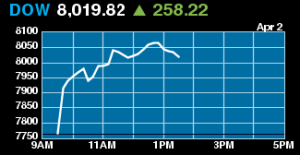 With the roughly 1,500-point rise in the Dow Jones average since early March, it seems investors have been dreaming about the good old days. This Bloomberg chart from last Thursday’s trading marks the apparent disconnect — you don’t have to be a stock market maven to sense that the dramatic rally will likely prove to be, in the parlance of Wall Street, the kaput kitty hitting the pavement.
Take your pick of grim indicators. For the last two months the Consumer Confidence Index has plumbed its lowest depths since its inception in 1967. As we learned Friday, the nation lost another 663,000 jobs in March, bringing the total to 5.1 million since the recession began in December 2007. Unemployment may be a lagging economic indicator, but there’s little to suggest that the wave is cresting or will be any time soon.
But the worst sign of all right now may be this: America is still stuck in the anger stage. Recently I overheard a classic strain of the outrage in a coffee shop in Noe Valley (hardly ground zero for hard times), in a conversation between two rather comfortable looking middle-aged adults. One was wailing away on America’s preferred punching bag, Mr. Wall Street Executive, for “raping the taxpayers” without remorse. His hair was so on fire that I feared his head might actually explode. Soon the talk hit on the hypocrisy of the Obama administration’s forcing General Motors chief Rick Wagoner to fall on his sword while Wall Street’s lords of finance so unfairly kept feasting on federal bailout funds. Somehow the disastrous story of the SUV-bloated American auto industry didn’t come up.
Indeed, we must also be in a recession of genuine awareness. While New York Times columnist Frank Rich can himself be shrill at times, he’s got it right regarding the continuing blame game:
Why is there any sympathy whatsoever for a Detroit C.E.O. who helped wreck his company, ruined investors and cost thousands of hard-working underlings their jobs, when there is no mercy for those who did the same on Wall Street? Might we, too, have a double standard? Could we still be in denial of the reality that greed and irresponsibility were not an exclusive Wall Street franchise during our national bender?
A prominent financial expert I interviewed last week for a forthcoming magazine piece on the economic crisis said to me at one point in our conversation, “Almost everybody who was part of the system failed.” He wasn’t only talking about Wall Street institutions, government regulators and the media.
Easily enough we get whipped into a frenzy over unjust executive bonuses or the sins of the media’s prime time ding-dongs. But what of America’s common financial lifestyle over the last two decades? As Rich continues, in answer to his own question: “Any citizen or business that overspent or overborrowed in the bubble subscribed to its reckless culture. That culture has crumbled everywhere now, and a new economic order will have to rise from its ruins.”
Even better put, it will have to be built from them. That will be painstaking, no doubt — block by block, brick by brick, as has been said by a certain someone. But right now, it seems, too many people are still standing on the outskirts shouting about who plundered the village, rather than heading into the collective rubble and really starting to pick up the pieces.
UPDATE: On a related note, Wall Street conspiracy theorists and/or Hollywood screenwriters will find plenty of grist in this Times front-pager on Larry Summers’ enriching hedge fund days at D.E. Shaw prior to joining Team Obama:
D. E. Shaw does not like to talk about what goes on inside its modish headquarters near Times Square. There, esoteric trading strategies are imagined, sketched on whiteboards and modeled on supercomputers by an elite corps of math wizards and scientists, most of them unknown to the outside world….
At Shaw, Mr. Summers, the professor, was often the student. The arrogant personal style that turned off some Harvard colleagues seemed to evaporate, Shaw traders say. Mr. Summers immersed himself in dynamic hedging, Libor rates and other financial arcana.
He seemed to fit in among Shaw’s math-loving “quants,” as devotees of math-heavy quantitative investing are known. Traders joked that Mr. Summers was the first quant Treasury secretary because he had once ordered dollar bills to be printed with the transcendental number pi — 3.14159… — as the serial number.
Paging Dan Brown and Ron Howard?
Osama bin Laden’s “man-caused disaster”?
Filed under: politics | Tags: CIA, FBI, foreign affairs, intelligence, language, national security, politics, terrorism, war
Leave a comment President Obama’s predecessor famously terrorized the English language. But lately, as the new, more fluent commander in chief and his team leave behind George W. Bush’s linguistic legacy on national security — jettisoning hard-line terminology such as “war on terrorism” and “enemy combatant” — they seem in danger of over-articulating.
In a recent interview with Der Spiegel, Janet Napolitano explained why, in her first testimony to Congress as Homeland Security chief, she used particular language to describe continuing perils. “In my speech, although I did not use the word ‘terrorism,’ I referred to ‘man-caused’ disasters,” she said. “That is perhaps only a nuance, but it demonstrates that we want to move away from the politics of fear toward a policy of being prepared for all risks that can occur.”
A worthy goal. But considering the mass casualties perpetrated in Manhattan or Madrid or London in recent years, is it really a good idea to deploy a phrase that’s in danger of suggesting accidental tragedy?
As Peter Baker reports in the New York Times, the Obama administration is opening itself to criticism that it doesn’t take the dangers of the world seriously enough. Says Shannen W. Coffin, who served as counsel to former Vice President Dick Cheney: “They seem more interested in the war on the English language than in what might be thought of as more pressing national security matters. An Orwellian euphemism or two will not change the fact that bad people want to kill us and destroy us as a free people.”
One can always count on a loaded partisan volley from the Cheney camp, but in this case one perhaps not easily deflected in the battle of political perception.
 Another national security legacy of the Bush era, deeply troubling, lingers. An internal report from late 2008 assessing the state of the U.S. intelligence system, made public this week, found precious little progress since 9/11 in terms of fixing serious bureaucratic risks. That’s despite the greatest overhaul since World War II of the system, including the creation of the Office of the Director of National Intelligence to oversee America’s spy agencies.
Many senior U.S. intelligence officials interviewed “were unable to articulate a clear understanding of the ODNI’s mission, roles, and responsibilities,” according to the report. U.S. spy agencies are still running “largely disconnected and incompatible” computer systems and have “no standard architecture supporting the storage and retrieval of sensitive intelligence.” And “intelligence information and reports are frequently not being disseminated in a timely manner.”
And while the concept of sharing information between agencies is “supported in principle” among some intelligence leaders, according to the report, “the culture of protecting ‘turf’ remains a problem, and there are few, if any, consequences for failure to collaborate.”
Hopefully the true consequences of such recent turf battles, and the excruciating story behind them, haven’t already gone forgotten.
Seeing Obama’s burden, the drug war and more
Filed under: culture, politics | Tags: art, economy, foreign affairs, media, politics, technology
Leave a comment Even in the loquacious realm known as the blogosphere, it is possible at times to lack words. Or to feel that there are simply too many of them. Either way, Daryl Cagle’s Political Cartoonists Index offers a pleasing alternative. Here are three recent entries that caught my eye.
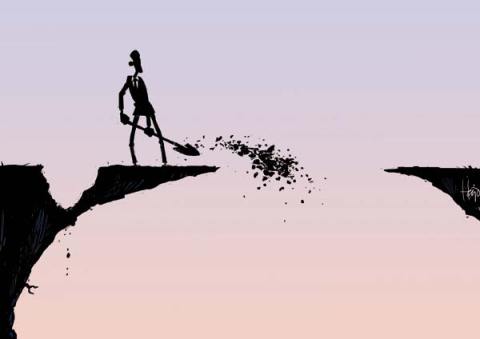
Hajo (Amsterdam), on President Obama’s economic travails:
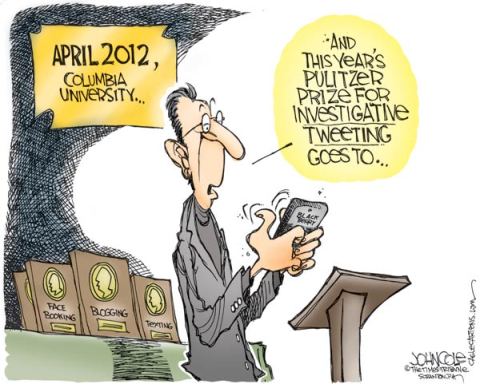
John Cole (Scranton, PA), peering into journalism’s truncated future:
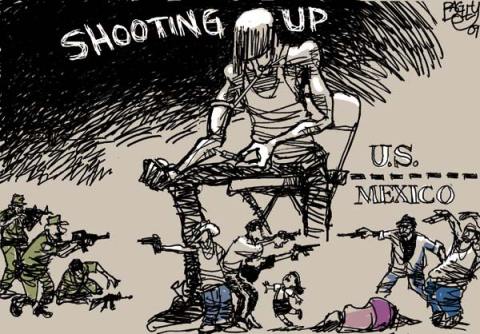
Pat Bagley (Salt Lake City), a potent take on the Mexican-American drug war:
Mexico’s drug war, fully U.S. loaded
Filed under: culture, politics | Tags: foreign affairs, guns, law, Mexico, national security, original reporting, politics
Comments (2) The raging drug war in Mexico is about to command even greater attention inside the United States. It’s not just the gruesome tales of drug cartel violence to the south; the U.S. is far more caught up in the maelstrom than many north of the border may care to realize.
Tuesday at the White House, Homeland Security Secretary Janet Napolitano laid out Obama administration plans to throw additional money and manpower at the problem, amid mounting fears about “spillover” of corruption and violence into the U.S. On Wednesday, Napolitano will go to Capitol Hill specifically to address the crisis, while Secretary of State Hillary Clinton is scheduled to arrive in Mexico.
The administration is deploying big guns like Napolitano and Clinton with good reason. As the Wall Street Journal reported recently, “The government is girding for a possible Katrina-style disaster along the 2,000-mile-long Mexican border that would involve thousands of refugees flooding into the U.S. to escape surging violence in northern Mexico, or gun battles beginning to routinely spill across the border.” A recent story from international reporting start-up GlobalPost shows how joint U.S.-Mexican operations have been implicated in the spreading violence, on both sides of the border.
Some relatively obscure testimony by senior officials from the ATF and DEA to a Senate subcommittee last week contains stark details about our country’s role in the predicament. Simply put, the U.S. is serving as a vast weapons depot for the drug gangs. Because firearms are not readily available in Mexico, cash-wielding drug traffickers have gone north to obtain many thousands of them. According to the law enforcement leaders’ testimony, 90 percent of traceable seized weapons have come from the United States. The ATF reports disrupting the flow of more than 12,800 guns to Mexico since 2004.

Smuggled weapons seized last December in Texas. (Photo via U.S. Immigration and Customs Enforcement.)
The weapons aren’t just coming from the U.S. border region. The law enforcement leaders cited a case from April 2008 in which 13 warring gang members were killed and five wounded: “ATF assisted Mexican authorities in tracing 60 firearms recovered at the crime scene in Tijuana,” they said. “As a result, leads have been forward to ATF field divisions in Denver, Houston, Los Angeles, Philadelphia, Phoenix, San Francisco and Seattle.”
Sources of the weapons, they said, “typically include secondary markets, such as gun shows and flea markets since—depending on State law—the private sale of firearms at those venues often does not require background checks prior to the sale or record keeping.”
Military weapons are also a growing problem: “In the past six months we have noted a troubling increase in the number of grenades, which are illegal to possess and sell, seized from or used by drug traffickers, and we are concerned about the possibility of explosives-related violence spilling into U.S. border towns.”
Given that the global war on drugs is a proven failure, there was another striking aspect of the testimony: The top revenue generator for the Mexican cartels isn’t cocaine, heroin or other hard stuff. It’s… marijuana.
Napolitano’s message Tuesday included the assertion that the Obama administration is “renewing our commitment to reduce the demand for illegal drugs here at home.” That comes on the heels of Attorney General Eric Holder’s announcing that the federal government will no longer prosecute medical marijuana dispensaries in California and other states where they are legal under state law. With the prospect of a day trip to Ciudad Juarez looking increasingly like a visit to Kabul, and with the violence ricocheting northward, perhaps those who have been advocating fundamental changes in the nation’s marijuana laws will start to see some political traction for their ideas.
Is AIG evil? Let’s hear from the people!
Filed under: media, politics | Tags: economy, future-of-journalism, media, NYT, politics, recession, technology, Wall Street
Leave a comment At hearings Wednesday on Capitol Hill lawmakers excelled at one of the things they do best: political theater. The outrage flowed, as Edward Liddy, the current CEO of American International Group, got grilled about the $165 million in bonuses going to a bunch of guys who helped bring the U.S. banking sector to the brink of collapse with immense and immensely reckless insurance bets. (A complicated scheme, but credit to President Obama, who did a decent job Wednesday morning of explaining in basic terms how they did it.)

To what degree Americans should be angry at taxpayer-backed AIG or our government leaders (past and present) is a murky discussion, but it’s clear that the level of outrage across the country is plenty high right now. (High enough not only to juice a show on Capitol Hill, but also some widely celebrated media blood sport.) What’s interesting to me at the moment is how a number of major news outlets have seen the popular discontent as an opportunity to highlight reader interactivity on the Web.
At the top of its home page Tuesday night the New York Times featured reader diatribes — treating them as news itself. “Some people are vengeful, calling for jail, public humiliation or even revolution,” reported A.G. Sulzberger. Over the last few days, “the most passionate voices, not surprisingly, could be found on the Internet — on blogs and discussion threads — in unusually bountiful numbers.”
On Wednesday afternoon, the Washington Post featured a round-up of its own reader comments, if not especially articulate or enlightening. (“Corporate and political self-seeking are devastating our families, our country, and out [sic] world.” Etc.) The Wall Street Journal’s home page gave top real estate to voices from the “Journal Community,” which tended, naturally, to reflect a constituency of a somewhat different kind. “The Obama administration is spending too much time and resources to go after this money,” scolded reader Craig Cohen. “The fact is, it will probably cost the US more money in legislative time, attorney fees, opportunity cost, etc to get these bonuses back than they are worth. But that doesn’t matter to the President. This is not about bonuses. It’s about class warfare. These bonuses went to the elite…. They must be punished!”
A key question on my mind is, how can media companies unlock greater potential with reader engagement and participation? It’s stating the obvious to say that there’s nothing cutting-edge at this point about letting readers loose with their opinions. (Put nicely, it tends to have limited value in unfiltered form.) Are there new ways to generate useful insight and information from the many smart readers out there, rather than just a lot of noise? This is an issue we grappled with regularly over the years when I was at Salon, and I have a hunch it could figure prominently in ways forward with news reporting in the rising digital realm. What if, for example, readers with experience in the culture of Wall Street could begin to add to the picture of how the AIG problem metastasized? Or shed light on how thoroughly it has been reported on?
Smart people have been working on ideas in this area for some time. Mother Jones has an interesting activist-style approach that it’s experimenting with. Between the ongoing destruction in the newspaper industry and what some major companies are attempting now online in terms of reader interactivity (the two hardly unrelated), I have the sense that whoever begins to unlock the challenge in a more creative, substantive way could make a big splash.
Sex commune and the city
Filed under: California, culture | Tags: California, politics, San Francisco
Comments (1) Ah, San Francisco, you gotta love this town. And loving it must include acknowledging that from time to time certain of its, um, cultural stimulations can seem a bit absurd. This was on display yesterday in the Sunday Styles section of the New York Times, which reported on the One Taste Urban Retreat Center, a 38-member live-play arrangement housed in “a shabby-chic loft building” in the city’s South of Market district. Its men and women (their average age the late 20s, the Times says) make meals together, practice yoga and meditation, and run communication workshops for groups of visitors. Oh, and also:
At 7 a.m. each day, as the rest of America is eating Cheerios or trying to face gridlock without hyperventilating, about a dozen women, naked from the waist down, lie with eyes closed in a velvet-curtained room, while clothed men huddle over them, stroking them in a ritual known as orgasmic meditation — “OMing,” for short. The couples, who may or may not be romantically involved, call one another “research partners.”
Apparently there are benefits to this of all sorts. One recently divorced man, “a baby-faced 50-year-old Silicon Valley engineer,” told the Times that “the practice of manually fixing his attention on a tiny spot of a woman’s body improves his concentration at work.”
Past practices at the center, which has been operating for over four years, include naked yoga. Anyone who has ever participated in a public yoga class knows this would be a remarkably ill-advised idea, no matter the direction in which it might be stretched. One Taste reportedly discontinued it after word got around and “many voyeuristic non-yogis showed up.” (Ya don’t say.)
San Francisco and surrounds has a well-known heritage, of course, of communal sexual experimentation and spiritual seeking. As far as I know per the history books, combining the two has never led to any particularly enlightening results.

What I find intriguing about this story isn’t a matter of morals or taste — it’s that the language and marketing themes are age-old, and not newly convincing. One Taste’s web site says that “Orgasmic meditation is a technique that develops mindfulness, concentration, connectedness and insight in a paired practice that focuses on sensation generated through manual stimulation of the genitals.” The practice can “facilitate greater physical and mental health, deeper connection to relationship” and can even be “a method for spiritual aims.”
In the Times report, a once timid patron turned instructor speaks of “the lingering velocity of my desire and my hesitation to give into it.” The proprietor and leader, Nicole Daedone, admits “a high potential for this to be a cult.” And while the article notes toward the end that Daedone’s current boyfriend, a wealthy software entrepreneur, “makes financial resources available” in support of the business, curiously, one stone remains unturned: cash flow. One Taste’s own program listings are also conspicuously absent information about what its participants are required to pay.
Hard truths about the Iraq war
Filed under: California, politics | Tags: books, California, foreign affairs, national security, politics, war
Leave a comment 1. With such enormous problems at home, it is hard to focus on enormous problems beyond U.S. borders, even when we perceive the dangers of turning too inward.
2. It is hard not to be exhausted of and desensitized to the whole awful mess. A week from this Thursday, it will have been six years since George W. Bush launched “shock and awe.” For the vast majority of Americans who have no direct connection to the war, if we are brutally honest with ourselves, it is hard in some respects to care at this point. (More on this below.)
3. It is but one of two daunting wars we are fighting. (And the new president is poised to make the other one larger.)
4. It is far, far from over.
 Despite items one and two above, distinguished military reporter Thomas Ricks had some tranfixing things to say about the war on Wednesday, during an interview on NPR about his new book. Ricks’ comments are likely to prove distinct from the White House talking points and news coverage that will mark the six-year anniversary of the conflict in the coming days. His reporting in Iraq, including interviews in 2008 with Ambassador Ryan Crocker, the top U.S. diplomat there, left Ricks to conclude, “The events for which this war will be remembered have not yet happened.” Here’s a bit more of what was most striking among his comments, from the forbidding magnitude of the problem to some startling attitudes about the war that Ricks encountered while promoting his book recently in the liberal-by-reputation Bay Area:
On the time frame we face:
“I think we may just be halfway through this war. I know President Obama thinks he’s going to get all troops out by the end of 2011. I don’t know anyone in Baghdad who thinks that’s going to happen. I think Iraq is going to change Obama more than Obama changes Iraq.”
On the scope of the disaster:
“The original U.S. war plan was to be down to 30,000 troops by September 2003…. I do think this war was the biggest mistake in the history of American foreign policy. I think it’s a tragedy. I think George Bush’s mistakes are something we’re going to be paying for for decades. We don’t yet understand how big a mistake this is.”
On the destructive prospects of the U.S. military pulling out:
“I think Americans are really sick of the Iraq war…. I was speaking in California last week, near liberal Mill Valley, and I said, Look, if you leave right now this could lead to genocide. And somebody in the audience said, ‘So what.’ And somebody else said, ‘Genocide happens all the time.’ And I thought, my god, Americans are willing to take genocide in Iraq, and just leave.”
Putting lipstick on a bear
Filed under: culture, media | Tags: economy, media, politics, recession, television, Wall Street
Leave a comment The Dow Jones average is swimming down around 6,800 today, hitting a new 12-year low. If in a basic sense the stock market represents a rough overall valuation of the U.S. economy, then the U.S. economy is now worth less than it was in April of 1997. Whether that’s realistic I have no idea, but either way it seems a rather stunning measure.
In recent days, by way of working on a forthcoming magazine article, I’ve been taking in a sizable dose of CNBC, the ubiquitous financial news network. The channel is watched obsessively by most on Wall Street (I saw this firsthand on a recent reporting trip to the New York Stock Exchange and surrounds), and its constant chatter can be found in airport lounges, urban corner stores and no doubt the many living rooms of America’s investor class. The personalities hosting CNBC’s various shows do produce substantive reporting on the financial world daily, but much of the air time is filled with infotainment, emphasis on tainment. In addition to the usual stream of industry banter and speculative investing ideas, these days there’s no shortage of finger-pointing commentary about the policy maneuvers of the Obama administration.

Still, you can’t run a popular cable network on a steady drip of downer, so today the hosts of CNBC’s “Power Lunch” have been trying their darn best to dress up another ugly day on Wall Street. Courtesy of their “smart strategies special,” cue the segment: Three ways to make money in value stocks!
“Apparently there are more value stocks out there than ever,” announces Sue Herera, preparing to welcome two money managers who’ll offer favored picks.
“Value stocks are being created right now,” declares a smiling Bill Griffith, glancing sidelong at the sinking averages.
Good luck, folks. As James Grant noted in a sobering roundup of financial experts in yesterday’s Times, the truth about vicious bear markets is that they end when investors finally give up hope. “Hope sustains life,” Grant writes, “but misplaced hope prolongs recessions.”
A reality check for the recovery plan haters
Filed under: media, politics | Tags: economy, media, original reporting, politics, recession, television, Wall Street
Comments (1) It doesn’t seem particularly out of the ordinary when Rush Limbaugh looks at Obama’s economic recovery plan and reiterates his desire to see the president fail. Or when Gov. Bobby Jindal, purportedly the rising star of the Republican Party, argues that federal spending is a bad way to pull the nation back from the brink. But these are no ordinary times — faced with the greatest domestic crisis in modern memory, at what point does hard-line politics make for sheer lunacy?
While reporting for a forthcoming magazine piece, I spoke recently with economist Dean Baker about some of the political right’s machinations regarding the economic meltdown.
“One thing that was amazing to me was people blaming the housing crisis on the Community Reinvestment Act. It makes no sense whatsoever,” said Baker, who is co-director of the Center for Economic and Policy Research in Washington. “The idea was widely circulated, so there are a lot of people out there who believe that what lies at the center of the crisis is that the government forced banks to make loans to poor people and minorities. That’s absurd, and the media should’ve been doing more to point that out.”
A few did, at least: Businessweek’s Aaron Pressman explained last fall why the 1977 federal law, requiring banks to lend in low-income neighborhoods where they take deposits, had little to do with the insidious subprime mortgages that inflated the housing bubble. (Pressman further pointed out that the Bush government in fact weakened the CRA, while enabling Wall Street to gorge on dubious derivatives and absurd leverage.) But the blame game holds powerful emotional appeal in dark days, and the warriors of the right soldier on in earnest. 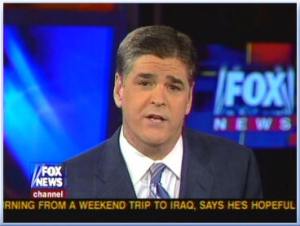 Fox News’ Sean Hannity keeps repeating a debunked GOP talking point that the freshly signed $787 billion recovery package contains a $30 million provision to save a salt marsh mouse in San Francisco. Simply erroneous, as Congressman Joe Sestak pointed out this week on Hannity’s own show. (Here’s the video.)
Baker worries that partisan warfare will squelch political appetite for additional stimulus — which he believes will be necessary going forward. Obama had to fight hard just to get the first big spending plan through Congress. “Nobody wants to waste money,” Baker said, pointing out that job creation and a particular project’s usefulness are different issues. “But if the alternative is that people think we’re somehow going to benefit by not spending money, then they’re just on another planet.” Without more government spending to come, he said, “we could see this downward spiral continue for some time.”
California notebook: New highs, new lows
Filed under: California, media, politics | Tags: California, economy, environment, food, politics
Leave a comment  San Francisco’s Tom Ammiano, a former city supervisor turned state assemblyman, wants to go green to help bail out the state from fiscal crisis. His plan would boost weed farms not wind farms. He introduced a bill Monday to legalize recreational marijuana and regulate it in a manner similar to alcohol, with a potential tax windfall of more than $1 billion. (The fragrant green stuff is thought to be a $14 billion cash crop in the state. Then there’s the potential savings in law enforcement costs in the hundreds of millions.) Not likely to fly, despite California’s reputation for cutting-edge policy and a devastating $42 billion deficit. But credit the San Francisco maverick for thinking creatively in a time of crisis. And credit the political opposition with the Most Mangled Cliché Award — said Calvina Fay, executive director of Save Our Society From Drugs, in the LA Times: “This would open another door in Pandora’s box.” (What’s she been smokin’?)
•
It’s been raining in the Bay Area for almost a week straight, happy news after a bone-dry January. But 2009 is on track for a third straight year of drought in California, with reservoirs still sitting at alarmingly low levels. It’s not just the prospect of shorter showers and less lush front lawns. As Jesse McKinley reported on the front page of Sunday’s New York Times, the twin calamity of recession and drought is hitting the Central Valley, the nation’s biggest agricultural engine, hard. Even as your income may be headed south, you’ll soon be paying more if you want almonds and avocados.
•
The once venerable San Francisco Chronicle may be the next casualty of the besieged newpaper industry. The paper lost more than $50 million in 2008 and is on pace to fare worse this year. Its owner, the Hearst Corporation, is demanding deeper cuts among an already downsized staff. If that doesn’t stem the tide of red ink, Hearst execs say, “we will have no choice but to quickly seek a buyer for The Chronicle, and, should a buyer not be found, to shut down the newspaper.” As with many others the publication’s reporting capacity has been shriveling as it struggles to survive the industry’s upheaval. But San Francisco without its oldest and largest newspaper? At the very least, another clarion call for digital journalism 3.0 to really get cranking.
Update: David Cay Johnston explains how the Chronicle, tellingly, failed to report adequately on its own serious situation.
Nothing to fear but everything itself?
Filed under: media, politics | Tags: economy, language, media, poetry, politics, recession
Comments (2) With the stock market sitting at half the level it did a decade ago, and with new surveys showing carnage in consumer confidence and housing, I’m struck by the saturated language of the national nightmare. (It’s not just the apocalyptic headlines driving us to despair.) This story from the Associated Press today gathers the poetry of the pain — after its lead sentence announcing that American confidence went into “free fall” in February, the relatively short dispatch uses each of the following terms at least twice:
fear (2)
decline (2)
plummet (2)
plunge (2)
collapse (2)
severe (2)
slash (2)
shrinking (2)
battered (2)
suffer (3)
drop (4)
sink/sank (4)
worried (4)
low (6)
Superlative phrases in the story include “massive job cuts,” “driven to their lowest level ever” (consumer expectations) and “the largest drop in its 21-year history” (a national home price index).
Recently a friend sent me an email wondering why President Obama hasn’t done more to talk up confidence as he’s traveled around promoting his economic recovery plan. The answer probably lies most in the calculus of Capitol Hill, and the political pressure apparently needed to pass his legislative agenda. There’s also Obama’s admirable position that he won’t sugarcoat the truth about our troubles the way the administration before him did to such disastrous effect.
But it’s a daunting balancing act with perception at this point. You don’t have to be an economist to sense how the downward spiral of fear could itself become deeply damaging. (If it hasn’t already — as Robert Shiller warned in a recent column, a Great Depression narrative “could easily end up as a self-fulfilling prophecy.”) And Obama’s political opponents increasingly are able to agitate using raw emotional appeal: Last night CNN’s in-house ideologue Lou Dobbs hammered at Obama’s “fear mongering” and accused him of repeatedly talking down the markets and economy. In the New York Times today David Brooks feigns sympathy for the president while suggesting that Team Obama is in way over its head. (“I hope the president succeeds even though he probably won’t!” is the message.)
Many will be watching intently tonight when Obama addresses a joint session of Congress for the first time. The only positive polling in sight shows that he’s still got the thumbs-up on job approval from a decisive majority of the public. It’s a remarkable measure of confidence floating on a tide of ugly numbers — Americans believe Obama will sail us in the right direction, even with no horizon in view.
Obama’s next epic crisis on the horizon
Filed under: politics | Tags: foreign affairs, intelligence, Iran, Israel, national security, politics
Comments (1) Sure, the Dow is hitting new lows and the economic meltdown is looking pretty damn frightening. (If the recent flood of headlines hasn’t made you want to hide in a hole, just read Paul Krugman’s mostly despairing analysis today.) But for the new president the trouble is only just beginning, as dark clouds gather to the east. Iran, it seems, is accelerating down a path toward nuclear weapons. That’s troubling in its own right — but far more so when adding to the mix a new right-wing government in Israel, the possibility of which looks imminent as hardliner Benjamin Netanyahu gains an edge in the country’s close election.
In late 2007, my friend and fellow journalist Gregory Levey took an in-depth look at Netanyahu’s political resurgence and the regional conflict that potentially could be unleashed if he returned to power. (This would be his second time as prime minister, having served from 1996-1999.) For anyone in the Israel peace camp, it would be an understatement to say that the prospect did not bode well. And now Iran may be even closer to being perceived truly as an immediate and existential threat. So while President Obama, admirably, has been signaling interest in a new era of diplomacy with the Iranians, he soon may be facing a much more dangerous brew in the Middle East.
 Mark Follman
You must be logged in to post a comment.